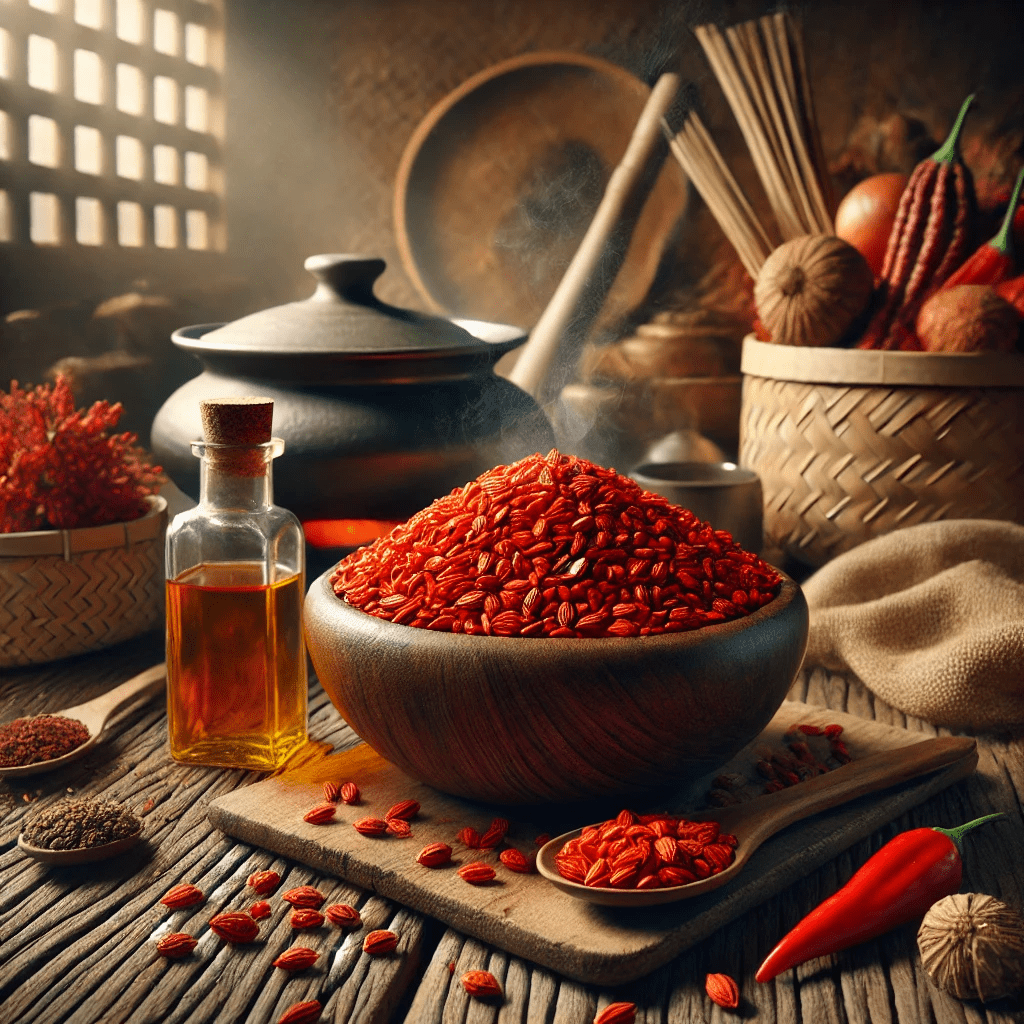
Atsuete, known globally as annatto, is one of the most versatile and culturally significant natural ingredients in Philippine cuisine. Derived from the seeds of the achiote tree (Bixa orellana), atsuete has played a pivotal role in coloring and flavoring dishes across the archipelago. This vivid reddish-orange dye not only enhances the visual appeal of food but also embodies a rich culinary heritage that bridges indigenous Filipino practices and influences from the Spanish colonial period.
The achiote tree, from which atsuete seeds are harvested, is native to tropical regions in Central and South America. Indigenous peoples of the Americas used annatto for centuries as a natural dye for textiles, body paint, and food. When the Spanish colonized the Americas in the 16th century, they brought the seeds to other parts of the world, including the Philippines. Over time, atsuete became a staple ingredient in Filipino kitchens, used primarily for its coloring properties and mild, earthy flavor.
The Introduction to the Philippines
During the Spanish colonial era, the Philippines was a vital trading post within the Galleon Trade network, which connected Asia, the Americas, and Europe. Alongside spices, fabrics, and other goods, atsuete seeds found their way into the Philippines, where they quickly gained popularity among local cooks. The ingredient’s striking color and versatility made it a valuable addition to native dishes, enriching the vibrant tapestry of Filipino cuisine.
The Preparation and Forms of Atsuete
Harvesting and Processing
Atsuete seeds are small, triangular, and covered in a reddish-orange resin. They are harvested by opening the spiny fruits of the achiote tree, which are dried and processed to extract the seeds. In Filipino markets, atsuete is often sold as whole seeds, ground powder, or in oil form.
Making Atsuete Oil or Extract
The most common way to use atsuete in Filipino cooking is by making atsuete oil or extract. Here’s a simple method to prepare it:
1. Heat a small amount of cooking oil in a pan.
2. Add a handful of atsuete seeds and stir gently over low heat.
3. Allow the seeds to release their vibrant red pigment into the oil.
4. Strain the seeds and reserve the oil for cooking.
For a water-based extract, atsuete seeds are steeped in warm water until the color is released. This liquid is then strained and added directly to recipes.
Culinary Applications of Atsuete in Filipino Cuisine
Traditional Dishes Highlighting Atsuete
1. Kare-Kare
One of the most iconic Filipino dishes, kare-kare is a rich peanut stew traditionally made with oxtail, tripe, and vegetables. Atsuete oil is a key ingredient, lending the dish its signature golden-orange hue. This natural coloring enhances the visual appeal and creates a comforting warmth that complements the dish’s nutty flavor profile.
2. Chicken Inasal
Originating from Bacolod, chicken inasal is a marinated grilled chicken dish that gets its golden-orange color from atsuete oil. The oil is brushed onto the chicken during grilling, creating a smoky, caramelized glaze that is both flavorful and visually striking.
3. Chorizo de Cebu
In Cebu, atsuete is used to color the local version of chorizo, a sweet and savory sausage. The vibrant orange hue adds to the sausage’s appeal, making it a popular choice for breakfast and street food.
4. Pancit Luglug and Pancit Malabon
These noodle dishes, known for their vibrant orange sauces, rely on atsuete extract for their distinct color. The atsuete not only enhances the presentation but also adds a subtle earthy note that ties together the flavors of seafood, pork, and eggs.
5. Embutido and Longganisa
These classic Filipino meat dishes often incorporate atsuete to achieve a visually appetizing color. Whether it’s the steamed embutido or the cured longganisa, atsuete enhances both appearance and flavor.
Regional Variations in Usage
Different regions in the Philippines use atsuete in unique ways, reflecting local ingredients and cooking techniques. For example:
• In the Visayas, atsuete is a key ingredient in binakol, a chicken soup with coconut and ginger.
• In Mindanao, atsuete is used in dishes like piyanggang manok (blackened chicken) and kurma, where it complements the vibrant spices of the region.
• In Luzon, atsuete enhances traditional stews, soups, and even rice-based dishes like sinangag (fried rice).
The Cultural Significance of Atsuete
Symbolism and Aesthetic Appeal
Atsuete’s vibrant color symbolizes life, celebration, and abundance. Its ability to transform the appearance of food has made it a symbol of culinary artistry, often reserved for festive occasions and special gatherings.
Integration into Filipino Identity
As a product of colonial trade and local ingenuity, atsuete reflects the adaptive nature of Filipino cuisine. It bridges the gap between the country’s indigenous roots and the global influences that have shaped its culinary traditions.
Health Benefits of Atsuete
In addition to its culinary uses, atsuete offers several health benefits:
1. Rich in Antioxidants
Atsuete contains carotenoids, powerful antioxidants that help protect the body from free radicals and reduce inflammation.
2. Good for Eye Health
The carotenoids in atsuete, particularly bixin and norbixin, contribute to maintaining healthy vision.
3. Anti-Microbial Properties
Studies suggest that atsuete has natural antimicrobial properties, making it a potential preservative in food preparation.
4. Promotes Skin Health
Traditional medicine in the Philippines often uses atsuete as a topical treatment for skin irritations and burns, thanks to its soothing properties.
Tips for Using Atsuete in Modern Filipino Cooking
For home cooks looking to incorporate atsuete into their recipes, here are some practical tips:
• Use atsuete oil as a base for sautéing vegetables, meats, or seafood to add a subtle earthy flavor and vibrant color.
• Experiment with atsuete powder in marinades for grilled or roasted dishes.
• Combine atsuete extract with coconut milk for a colorful twist on traditional stews.
Challenges and Sustainability
Despite its widespread use, the atsuete industry faces challenges such as overharvesting and competition with synthetic food dyes. Promoting sustainable farming practices and supporting local atsuete growers can help preserve this essential ingredient for future generations.
Atsuete is more than just a food colorant; it is a testament to the richness of Filipino culinary traditions. From its historical roots to its vibrant role in modern cuisine, atsuete symbolizes the creativity and resourcefulness of Filipino cooks. By celebrating and preserving this natural ingredient, we honor not only the flavors of the past but also the promise of a vibrant culinary future.
Through its transformative color and subtle flavor, atsuete continues to bring joy, warmth, and beauty to Filipino dishes, ensuring its place as a cherished staple in kitchens across the Philippines.
