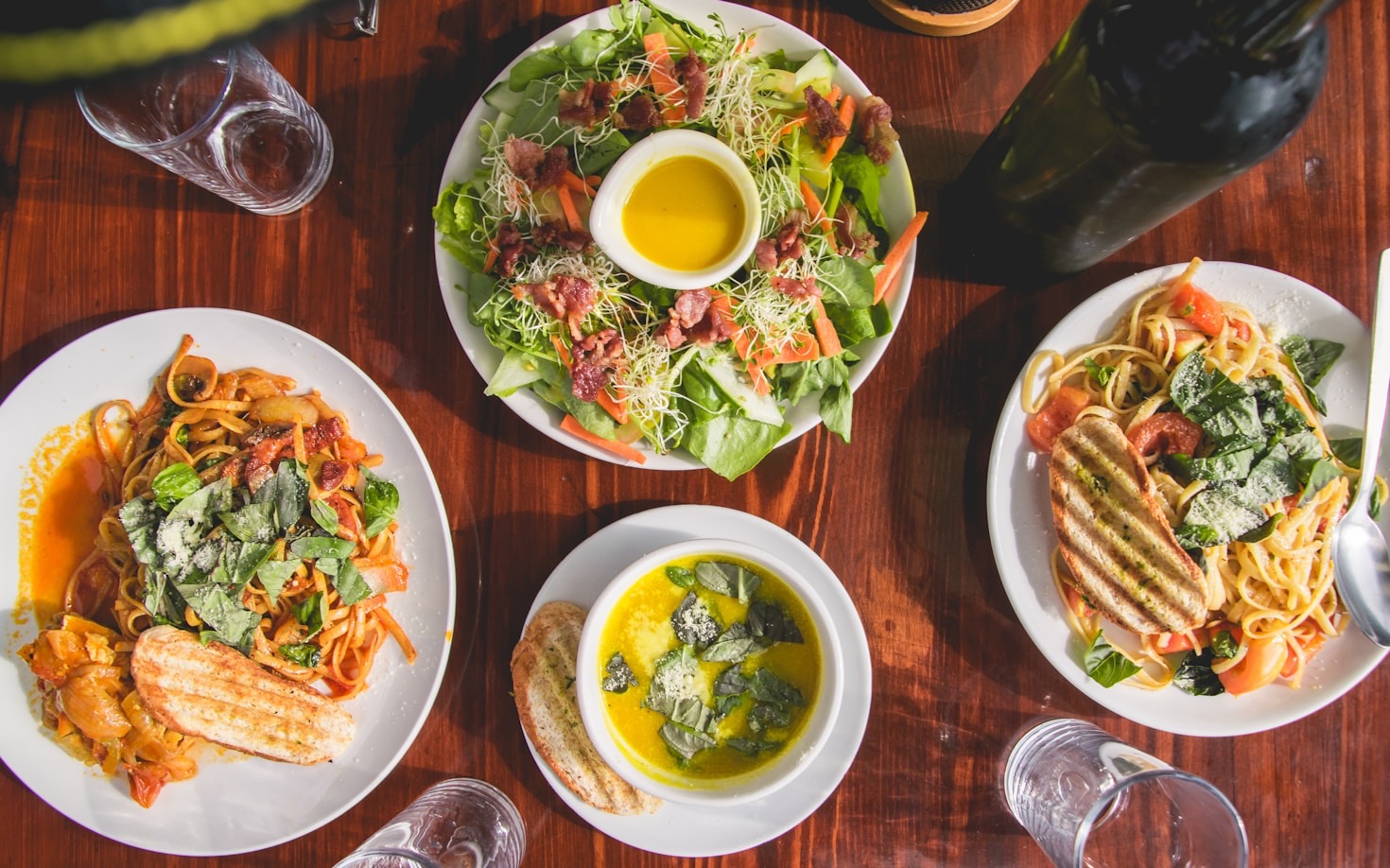
Plating is the first sentence of the story your dish is about to tell.
Before a guest tastes anything, they read the plate with their eyes. They notice what leads, what supports, and what feels deliberate. Strong plating does not rely on “more garnish” or complicated patterns. It relies on intention, restraint, and control. When those three are present, even the simplest dish looks premium.
Plating is the ability to deliver intention and clarity every single time, not only when you have extra minutes and perfect lighting.
Start With the Plate, Not the Food
Most plating mistakes happen before the food even hits the plate.If the plate is loud, the food must be quiet. If the food is complex, the plate should step back and let the dish speak. Clean white plates create clarity and make colors look brighter. Dark plates add drama but demand strong contrast, especially in sauces and garnishes. Wide rims naturally create negative space, which reads as refinement. Bowls make sauced dishes easier to control and keep clean, which is why they are often the most practical option for consistent restaurant presentation.
Choose the plate that supports your message:
White plates: best for color contrast and clean fine-dining look.
Matte black or dark stoneware: dramatic, modern; works best with light sauces and bright garnishes.
Wide-rim plates: create natural negative space and look premium.
Bowls: ideal for saucy dishes; easier to keep clean and controlled.
Small plates: force discipline; great for tasting portions.
Sixto’s rule: If the plate is busy, your food must be simple. If your food is complex, keep the plate quiet.


The Five Pillars of a Beautiful Plate
The strongest plates share a few common characteristics, even when the cuisines are different.
1) Contrast (Color + Texture)
A plate reads faster than it tastes. Contrast creates instant appetite. Contrast is one of the most powerful tools. Bright against dark, crisp against creamy, fresh herbs against rich sauces, pickled elements against fatty proteins. A dish that has contrast looks alive.
Pair light + dark (puree vs. charred protein)
Pair soft + crisp (creamy base with a crackling garnish)
Add one bright element (herb oil, pickles, citrus zest, chili)
2) Negative Space
Empty space is not “wasted.” It is framing. Negative space matters just as much as what you place on the plate. Empty space is not wasted; it is the reason the plate looks intentional. When everything is crowded, nothing stands out and the eye has nowhere to rest.
Leave 30–40% of the plate clean
Do not scatter random dots and leaves “just because”
3) Height (But Not a Tower)
Height adds presence, but it must be functional. Guests should not feel like they are dismantling a tower. Height should come from layering that makes sense: a base, a hero, supporting elements, then a crisp finishing detail.
Build height with layering: puree base, protein, vegetables, crisp
Keep it functional: the guest should be able to cut and scoop naturally
4) Sauce Discipline
Sauce is the fastest way to elevate—or ruin—presentation. Sauce is where many plates succeed or fail. Sauce should look controlled, and it should have a clear role in flavor. When sauce is messy, the entire plate reads messy. When sauce is disciplined, the plate looks expensive.
Sauce should have purpose (acidity, richness, spice, aroma)
Too much sauce makes the plate look heavy and messy
5) Cleanliness
Fine dining is often just “clean” plus “confident.”
Finally, cleanliness is non-negotiable. A spotless rim and a plate free of splashes is often the difference between “nice” and “professional.”
Wipe the rim every time
Remove splashes
Avoid oily fingerprints on the plate
Tricks From Sixto That Instantly Upgrade Any Plate
Trick 1: Plate in Odd Numbers
Odd groupings tend to look more natural to the eye. When you are placing small components, such as scallops, dumplings, quenelles, or garnish clusters, a thoughtful odd grouping often reads as more balanced than even spacing.
- 3, 5, or 7 works better than 2, 4, or 6
Trick 2: Use a “Base” to Anchor the Dish
A reliable approach is to anchor the dish with a base instead of placing the protein directly on a bare plate. A smooth puree, a tight pool of sauce, a small grain bed, or a lightly dressed salad nest creates a sense of structure. It tells the guest that the placement is designed, not accidental.
- Puree swipe
- Grain bed
- Light salad nest
- Thin sauce pool
This makes the plate look designed, not placed.
Trick 3: One Hero, One Supporting Cast
A plate with five “heroes” looks confused. Another habit that sharpens plating instantly is choosing a single hero. A plate with multiple “main characters” looks confused. Decide what leads, then let everything else support it through acidity, texture, freshness, and aroma. If you are tempted to add more components, it usually means the hero is not strong enough or the dish needs one clean supporting element, not three.
- Pick one hero (protein, main vegetable, or signature element)
- Everything else supports that hero: acidity, crunch, freshness, aroma
Trick 4: Make Your Garnish Earn Its Spot
Garnish must earn its place. If it adds aroma, acidity, crunch, or a deliberate color pop, it stays. If it does nothing for taste or texture, it is visual noise. Many plates become instantly more elegant simply by removing garnish that exists only to fill space.
- Add aroma (herbs)
- Add acidity (pickles)
- Add crunch (crisps)
- Add color (oil, zest, petals)
If it does nothing, remove it.
Trick 5: Use Micro-Details, Not Micro-Noise
Microgreens are not a solution. They are a tool. Precision is not about being complicated. It is about being consistent. Use micro-details with restraint. A small, clean cluster of herbs placed with purpose is more powerful than scattering greens across the plate.
- Use one small cluster, not a lawn
- Place it where it makes sense: near sauce, near fat, near acidity
Trick 6: Control Sauce Like a Professional
If you want a plate to read as refined, treat sauce like a design element.
A confident single drag can look modern and clean when done with control. A tight pool under the protein keeps the plate grounded and prevents the sauce from spreading into chaos. A few consistent dots can look sharp when the sizes and spacing feel intentional. The common thread is discipline. When you mix multiple sauce styles on the same plate without a plan, the dish looks undecided.
Sauce should highlight the dish, not announce itself.
Three reliable sauce styles:
- Spoon drag: place a spoon of sauce, drag once with confidence
- Squeeze bottle dots: three to five dots, same size, same spacing
- Tight pool: small circle under the protein so it looks intentional
Important: Do not do multiple sauce styles on one plate unless you’re very deliberate.
Trick 7: Finish With Something “Dry”
Dry finishes sharpen the look and the taste:
- Toasted crumbs
- Powdered dried herbs
- Fine grated cheese
- Citrus zest
- Flaky salt (light touch)
It adds texture and makes the plate read more premium.
Three Plating Layouts You Can Use Every Time
Layout A: The “Clock”
Classic hotel and banquet-friendly. A classic clock-style composition is reliable for consistent service. It gives a clear structure for the hero, a starch or puree element, and a vegetable component, while keeping sauce placement predictable. This works especially well in banquet and hotel settings where speed and repeatability matter.
- Protein at 2 o’clock
- Carbs/puree at 10 o’clock
- Vegetables at 6 o’clock
- Sauce controlled around the hero
Best for: Western mains, banquet service, consistent plating.
Layout B: The “Landscape”
Modern, fine-dining style.
- Components flow left-to-right like a scene
- Negative space becomes part of the design
Best for: tasting menus, plated events, refined restaurant plates. A landscape style, where components flow across the plate like a scene, reads modern and fine dining. It requires more restraint, because negative space becomes part of the design. When done well, it looks effortless and high-end.
Layout C: The “Stack”
Elegant without being messy. A layered, structured stack creates height and elegance without turning into a tower. It works particularly well for proteins that sit beautifully on a base, with vegetables and crisp finishes built in a way that still allows easy cutting and scooping.
- Base (puree/grain)
- Protein
- Vegetable
- Crisp garnish
- Sauce kept tight
Best for: steaks, poultry, braised items, composed salads.
Tools That Make Plating Easier (And Cleaner)
Plating improves quickly when you use the right tools and stop improvising with the wrong ones.
An offset spatula gives you clean puree spreads and controlled edges. Squeeze bottles give you consistency in sauce placement. Tweezers allow intentional garnish work without crushing herbs or smudging sauces. Ring molds help you shape grains or salads neatly when you need consistency across many plates. A microplane creates delicate finishes that look refined without adding clutter.
Even temperature control is part of the toolkit. Warm plates help hot food stay alive, keep sauces glossy, and reduce the dull look that happens when food cools too early.
Offset spatula: purees and smooth spreads
Squeeze bottles: sauce control
Tweezers: precise garnish placement
Ring mold: neat grains/salads
Microplane: zest, cheese, finishing
Warm plates (for hot mains): keeps sauce stable and glossy
Timing: The Silent Secret of Great Plating
A plate can look perfect and then collapse in under two minutes if it is plated too early.
Steam softens crisps. Moisture dulls herbs. Sauces can spread, break, or lose their shine. The fix is simple: build the plate, then finish it at the last moment. Sauces should be placed late. Crisps and fresh herbs should be the final touch. If you need to hold a plate, keep the finish elements ready and add them only when the dish is leaving the pass.
- Plate hot food on warm plates
- Sauce at the last moment
- Crisps and herbs last
- Avoid plating too early—steam and moisture ruin texture and shine
Common Plating Mistakes (And How to Fix Them)
Mistake: Overcrowding
Fix: Remove one component. Make space.
Mistake: Random garnish
Fix: Replace with purposeful acidity or crunch.
Mistake: Too much sauce
Fix: Use half the amount and tighten the placement.
Mistake: No contrast
Fix: Add one bright element: herb oil, pickles, zest.
Mistake: Messy rim
Fix: Wipe the rim every plate, no exceptions.
Sixto’s Quick Plating Checklist (Use This Before You Send)
- Is the hero obvious?
- Do I have contrast (color + texture)?
- Is there enough negative space?
- Is the sauce controlled and clean?
- Does every garnish add flavor or texture?
- Is the rim spotless?
- Would I be proud to serve this to a VIP?
Leave a Reply